
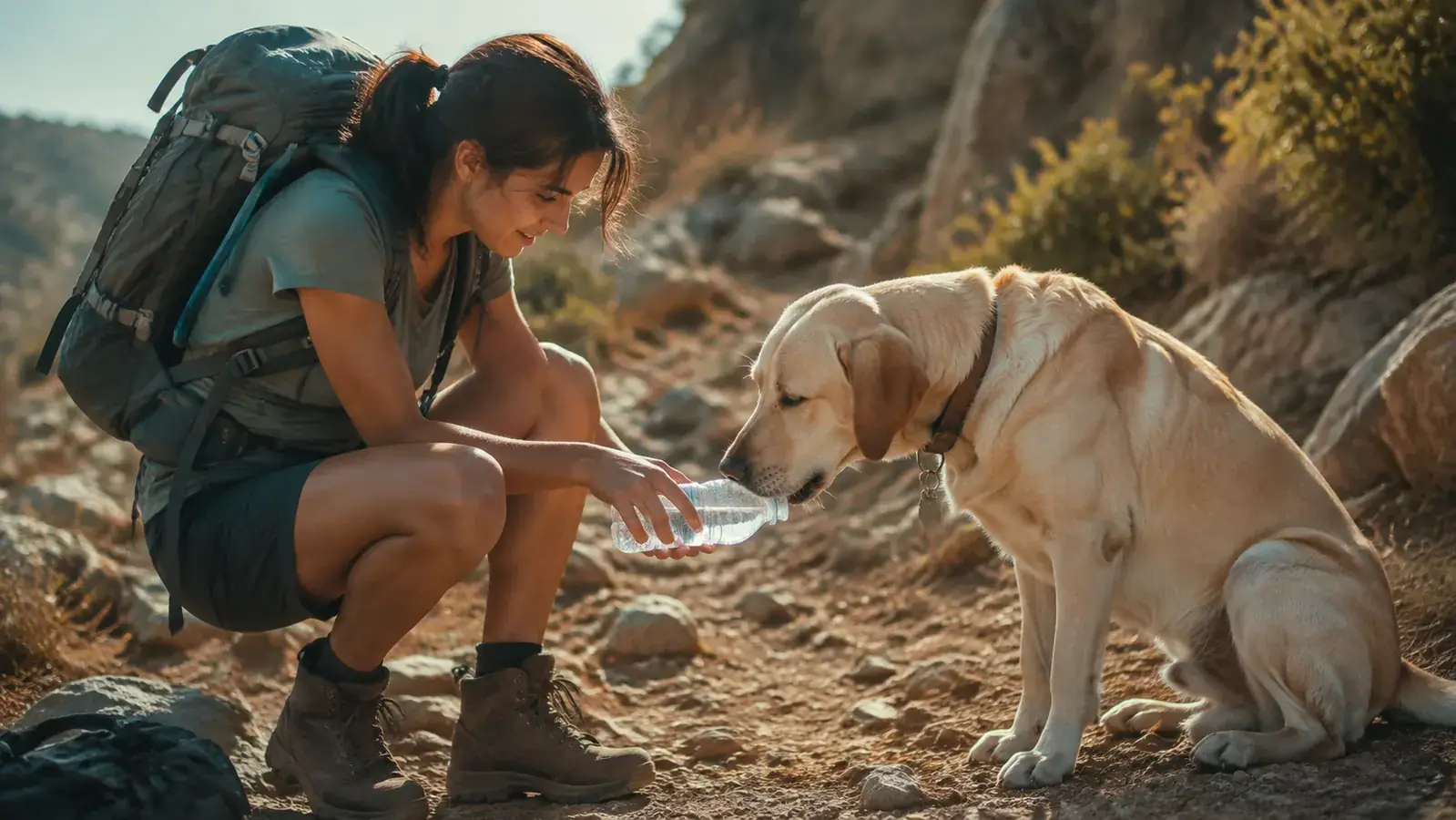
Halfway up a July-grade climb I turned around to check on Gauge, my twelve-year-old lab retriever. He was moving slower than the pack he was carrying, tongue nearly to his knees, and that is the moment you realize you packed plenty of water for yourself and not a drop for the dog that is doing twice the work you are. I am Mark Tolliver, and after a decade of hauling dogs up trails, across cutovers, and into fly-fishing holes, I have a simple set of rules for keeping them hydrated on the move. It took me two scary trips to build them, and I can tell you exactly where I went wrong so you do not have to. The portable bottle I trust, the Kalimdor, is a big part of that routine.
The honest truth is that dogs overheat faster than people and hide it far longer. They cannot tell you they are dry. They can only slow down, and by the time a dog visibly cuts its pace, it is already well behind on fluids. The fix is not complicated: carry enough water, deliver it in a way a tired dog will actually drink, and take breaks before you think you need them. Here is exactly how I do it, with the gear that has survived the worst of it.
The Bottle I Clip to My Pack Every Single Trip
The Kalimdor portable dog water bottle has an 19oz tank, a one-touch valve, and a built-in bowl that folds back in, so you carry water and the dish in one sealed unit. I have packed this thing through a full season of streams, gravel roads, and dusty campsites without a single leak in my bag.
Amazon Check Today's Price on Amazon →Step 1: Work Out How Much Water Your Dog Actually Needs
Most owners drastically under-carry. The general working rule is about one ounce of water per pound of dog per day at rest, and you want more than that on a hot trail. A 60-pound retriever like Gauge is a two-liter dog on an active summer day. That is four of the 19oz bottles if you are not careful, and nobody is carrying four bottles by hand.
You do not need to do the full math on every trip, but you need a number to start from. I reach for a rough target of one full bottle per hour of hard hiking for a mid-size dog, less on shaded or cooler trails, more on rock, sand, or anything above seventy degrees. If you plan a three-hour loop with a 60-pound dog, that is roughly three bottles of water minimum, and you carry the third one even on the days you think you will not need it. Running out halfway out is how you end up doing what I did once, pouring my own bottle into a cupped hand and watching most of it hit the dirt.
A few factors change the number on any given day, and you want to bake them into your plan rather than react to them on the trail. Black or dark-coated dogs soak up heat far faster than a lighter dog, so mine, a nearly black lab, needs more water and more shade than a yellow dog on the same route in the same heat. Age matters too. Gauge is twelve, and an older dog with a slower cooling system gets extra breaks whether he looks like he wants them or not. New mileage also counts, a dog that has not been worked in months will burn through fluids faster than one in shape. If any of those apply to your dog, round your water estimate up, not down.
Step 2: Carry the Water in the Right Container
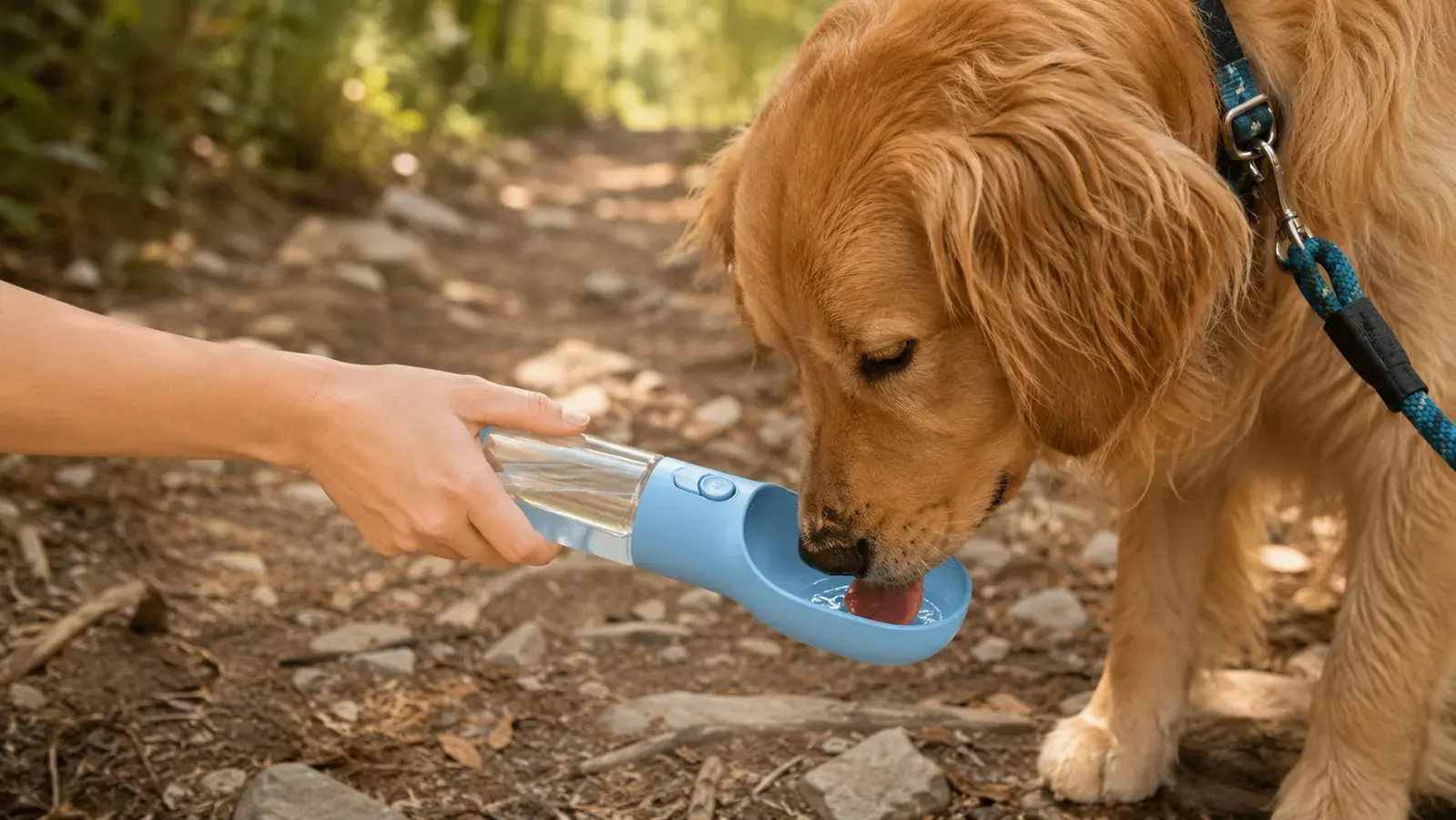
The biggest mistake is carrying water for the dog in a human bottle or a canteen, because then you have to find a bowl, or a cupped hand, or a spare folding dish you left in the truck. The reason the Kalimdor bottle won a permanent spot in my kit is that it combines the tank and the bowl into one piece. You tilt it, a little stream runs into the attached feeding tray, and the dog drinks without me juggling three objects or kneeling in a puddle.
It is 19oz, which is a good single-bottle size, and it clips to a pack strap or a belt loop so it rides with you instead of getting buried. On the honest side, no bottle this size holds a full day's water for a big dog, so I treat it as the delivery system and carry additional sealed water separately. But as the thing you hand a panting dog every half hour, it has been more reliable than every folding silicone bowl I have tried, because it does not spill when you set it down on a slope.
There is a real distinction between the bottle that delivers water and the jug that carries the reserve. I keep the Kalimdor clipped where I can reach it one-handed on the move, and I keep the extra sealed water deeper in the pack so it stays shaded and cool. If you carry everything in one open container, the whole thing warms up by midday and a hot dog will drink less. A little planning about which container does which job keeps every sip refreshing instead of tepid.
Step 3: Deliver Water Early and Often, Not When the Dog Asks
A dog will rarely stop to ask for water on its own. Mine certainly will not. Gauge would run until his tongue hit the ground before he sat down on his own, because that is what a retriever does. So I do not wait for him to tell me. I set a timer in my head and offer water at every natural break: the top of a climb, a creek crossing, a fallen log. Every thirty to forty minutes on a warm day, more often when it is hot.
The other half of delivering water is making it easy to drink. A dog that is hot and tired does not want to put its face in a deep narrow bowl full of stale water. It wants a shallow, fresh stream it can lap up without gulping air. That is where the one-touch valve on the Kalimdor earns its keep, because you control the flow and the dog drinks at its own pace without inhaling half the bottle. Watch how fast they drink and slow the stream down if they are coughing, because a dog that gulps too fast and coughs will often turn down the next offer.
I also learned to split the offerings. Instead of trying to get the whole bottle into a thirsty dog at one stop, I give smaller amounts more often. A few good laps at every break beats one big drink that comes late. Small frequent sips sit easier on a working stomach, and they keep the dog drinking steady over the whole route instead of spiking and then refusing water for the next mile. If my dog drank a little at the last three breaks, I count that as a win and I do not force more.
Step 4: Read the Early Signs Before They Turn Serious
You do not need a veterinary degree to catch early dehydration, you need to pay attention during the first hour. A dog that is lagging behind, losing interest in the trail, panting harder than the pace warrants, or with a dry, tacky nose and gums is telling you it is behind on fluids. Lethargy that does not lift after a water break is the biggest one. If I offer water and a normally thirsty dog turns it away, that is a flag to stop, find shade, and cool the dog down before I consider going further.
I have learned to look for the subtler stuff too. Sunken eyes, skin that stays tented when you pinch it at the shoulder blades, and a dog that starts drooling thick spit are all later signs that mean stop and get the dog cool, not push another mile. When in doubt, I sit down, get the dog in the shade, wet the pads and belly with cool water, and offer small amounts of water at a time. A dog that has overheated does not need a gallon dumped in at once, it needs slow, steady sips and rest.
Watching the gums is the single easiest check I do on a hot day. Pry the lip up and press a finger against the gum tissue; in a well-hydrated dog it pinkens back quickly, and in a dry dog it stays pale and slow. I am not a vet and I do not pretend to be one, but that quick check at each big break has flagged more than one dog that was cutting it close on a long afternoon. If you are ever unsure, do not gamble on finishing the loop, turn back toward the truck and cool the dog down. A finished trail is not worth a dog in distress.
Step 5: Plan the Route Around Reliable Water and Shade
The best hydration plan is one you build at the kitchen table, not when the dog is already lagging. Before I leave, I look at the forecast and the route and ask where the water is. Early season, I planned a loop on a day it hit eighty-five and skipped the stretch along the shaded creek because it added a mile. Gauge paid for that decision. Now I bias hot-day routes toward shade, streams I can use to wet the dog down, and shorter climbs, and I keep the morning start time earlier.
Streams are tempting but risky. I let a dog drink from a moving, clear stream only if I am past the point where the water is obviously cold and clean, and even then I would rather pour them a bottle of the water I hauled in. Stagnant ponds, puddles, and slow ditches are off the table, because they carry the bacteria that turn a fun weekend into a vet bill. The Kalimdor bottle does double duty here: when the trail is dry, it is the only clean source my dog gets, and on a wet trail it means I never have to choose between a risky drink and a thirsty dog.
What Else Helps
Water is the foundation, but a few cheap additions make a big difference on hot trips. I carry a spare bottle of clean water for cooling, not drinking, and I dump it over the dog's pads and belly on an overheated stop, because dogs shed heat through their feet and a wet belly cools them faster than anything you can say. I also pack an electrolyte powder formulated for dogs for the bad days, and I only use it when the dog has clearly lost a lot of fluids, because plain water is still the right call most of the time.
Timing the trip itself is part of hydration too. I start summer hikes as early as I can drag myself out of bed, and I plan the exposed, sun-beaten sections for the morning shade while I save the tree-lined stretches for the heat of the afternoon. I match the pace to the dog, not to my own ambition, and I call a full stop for ten or fifteen minutes in the shade at the route's high point. That mid-route sit-down, with water and a snack for both of us, has done more for my dogs over the years than any single piece of gear.
The rule I live by now is simple: if I am drinking, the dog drinks. If I have not had water in 45 minutes, neither has the dog, and that is the break we take. Treating my own thirst as the sign to stop has kept Gauge out of trouble on every trip since, and it is the one habit that costs me nothing and protects everything.
Pack the Bottle, Not the Urgent Care Bill
A dehydrated dog on the trail is a preventable problem, and the fix weighs a few ounces clipped to your pack. The Kalimdor dog water bottle has held up through a full season of real trail use for me, and it is a lot cheaper insurance than a vet-room shock, plus electrolytes, plus a ruined Saturday.
Amazon Check Today's Price on Amazon →