
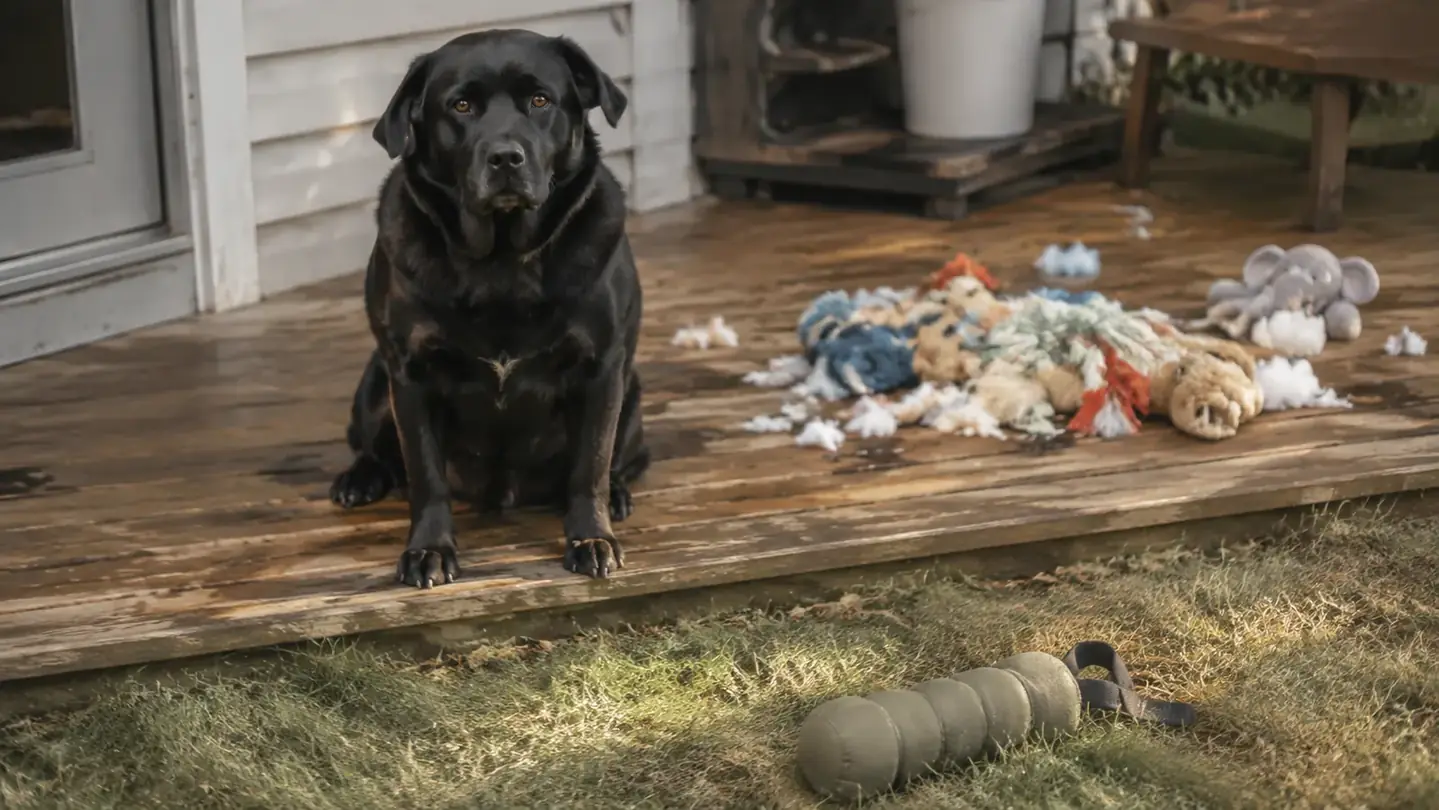
Every heavy-chewer owner I know keeps a shoebox of casualties. Torn rope, a squeaker toy with the stuffing pulled out before the first campout, a flattened tennis ball that never bounced. I kept an even more expensive casualty list for a while: a pair of hunting boots, one truck seatbelt cover, and the corner of a cedar camp chair all went down to our lab mix, Chet, before I got serious about this. Chet is 76 pounds, has never met a seam he respected, and the day I stopped buying toys by the picture on the box and started matching the material and the size to the dog was the day the destruction slowed way down.
This is the guide I wish someone had handed me that first week. Not a list of the cutest toys, a method instead. You start with the dog's chewing style, then the material, then the size, then the wear signs that tell you when a toy is officially done. Get those four right and a genuinely tough toy like the Nylabone Power Chew outlasts the chewing instead of just delaying it. Most of the five-star reviews on any tough toy are written by people who got the first three steps right, and most of the one-star reviews are written by people who skipped them.
The One Toy Our Chewer Has Not Killed in Eight Months
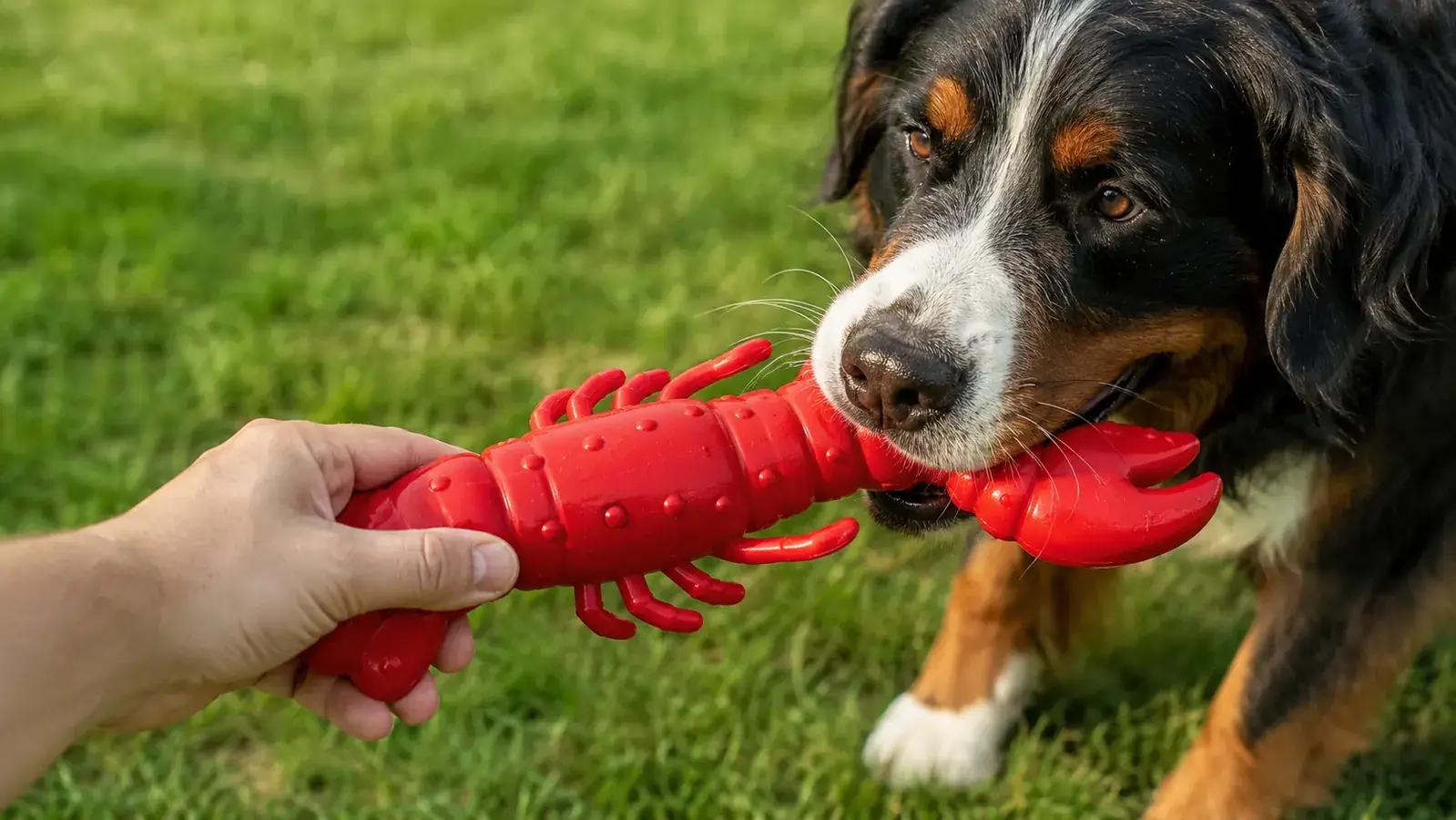
The Nylabone Lobster Power Chew for extra-large dogs is one of the few things Chet has not destroyed. It is the reference toy I use for the material and size math in this guide. Check the current price and the right size range for your dog on Amazon.
Amazon Check Today's Price on Amazon →Step 1: Be Honest About How Hard Your Dog Actually Chews
Before you look at a single material, put your dog in one of two buckets: casual chewer or power chewer. A casual dog mouths a toy for twenty minutes, gives it a good shake, and drops it without a scratch. A power chewer treats destruction as the job. Chet is a power chewer in the worst sense, he does not take toys apart, he fixates on one spot and grinds at it for an hour until the material gives. That focused, sustained pressure on a single point is the thing that kills most toys, and it is a different problem from a dog that just likes to shake.
Here is a useful tell: watch where the wear actually lands. A dog that always attacks the same corner will burn through anything soft in a day. A dog that spreads the chewing around is considerably easier on its toys and can enjoy a much wider range. If you cannot keep a plush toy alive for even a week, you are firmly in the power chewer bucket, and you should skip the soft aisle entirely. The brands that build for this pay attention to it, Nylabone rates its toys by chew strength, and its Power Chew line sits at the aggressive end of the scale for exactly this reason.
One more thing on the honesty step: age matters more than people expect. A puppy's adult teeth are still settling and a young dog's jaws change month to month, so the toy that fits them in spring can be hopeless in the fall. A settled adult or senior dog has a fixed jaw and a fixed chewing habit, and that is the dog for whom picking the right tough toy pays off the most. Chet is nine, his jaw does not change anymore, so any toy I buy for him has to survive the same grinder every single day. That up-front honesty saves real money.
Step 2: Pick the Material Around the Chew Strength
There are three real material options for a power chewer, and I would argue only three worth serious consideration: heavy rubber, nylon, and natural antler or horn. Heavy rubber, of the kind Goughnuts and a few others make, is flexible and a little forgiving on the teeth, and the better rubber toys carry a lifetime replacement promise. Nylon is what the Nylabone Power Chew is built from, and it is rigid in a way that rubber is not. It does not flex, and that stiffness is precisely why a focused grinder cannot tear chunks off it the way they can shred a rubber toy's surface over time.
In my experience the order you try them in matters. Rubber is the better first choice for a younger or medium dog whose teeth are still settling, because it yields a little under pressure and is gentler on enamel. Nylon is the better choice for the older, fixed-jaw grinder who has already gone through two or three softer chew-toy generations and is now just hunting for the strongest thing in the house. Chet keeps both, but the Nylabone nylon piece is the one that lives on the truck floor, because it shrugs off the grit, mud, and pine duff that would sand a rubber toy down to nothing in a couple of seasons.
Antler is a legitimate third option and it is popular for a reason, it lasts and dogs love the marrow. But it has its own cautions that the packaging never mentions: on a hard chewer, antler can chip and splinter, and a swallowed sliver is a real problem. If you go antler, you inspect it before every single use and you pull it the second a crack shows. That is a different level of babysitting than nylon or rubber, so I keep antler for supervised sessions and let the nylon piece carry the daily load.
Step 3: Get the Size and Breed Rating Right
This is the step almost everyone skips, and honestly it is the one that causes most of the failures. A toy that is too small for the jaw is a choking hazard, full stop, and it also moves around too much in the mouth, which lets the dog get a better grip on whatever weak spot it is hunting. A toy that is too big is no fun, gets ignored after the first ten minutes, and sends the dog straight back to your boots for entertainment. The right size is the one the dog can grip comfortably but cannot fit the whole thing in its mouth. That sweet spot is narrower than you would think.
Read the weight rating stamped on the package and take it seriously. The Nylabone Power Chew I keep for Chet is marketed for extra-large dogs over 50 pounds, and Nylabone separates that line from its puppy and small-dog toys for a real reason: the plastic is thicker and the whole shape is bigger. I learned this the hard way when I grabbed a toy meant for a 35-pound dog because the bag was on sale. It held no interest and no challenge for a 76-pound grinder, and I was back to protecting my bootlaces within the week. Match the size to the dog, not to how big the toy looks in the shopping cart.
A practical note on measuring: when in doubt, size up for a power chewer, not down. The jaw of a heavy chewer wants the largest toy the dog can still carry and hold, because a bigger toy gives the dog more surface to grip and spreads the wear across a wider area. Chet's Nylabone is the extra-large size and it is the first chew toy he has not managed to reduce to a stub. If you are between two marked sizes, the larger one is almost always the safer and longer-lasting choice.
Step 4: Check Wear Signs Every Few Days, and Treat This as the Real Safety Step
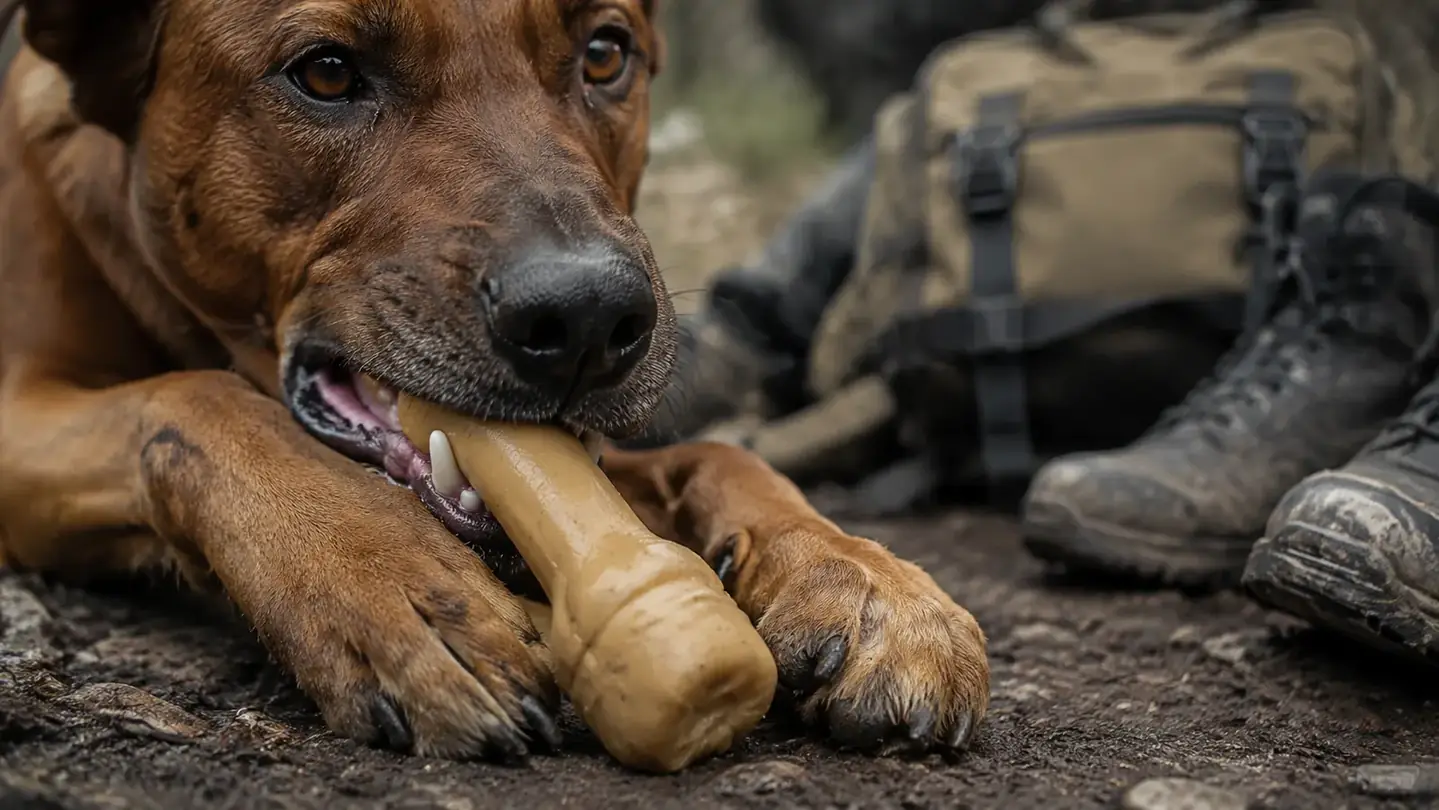
No chew toy is immortal, and I lean on a specific phrase with other owners: every tough toy is a replaceable toy. Nylon wears in a recognizable way, a rough, furry groove forms where the dog focuses its chewing, and once that groove gets deep enough that the dog can break off a piece, the toy is done. A swallowed chunk of nylon or rubber is exactly the kind of emergency that makes an owner swear off chew toys forever in hindsight. The wear check is not a formality, it is the difference between a toy and a surgery.
So build the check into your routine the way you check anything else on a working dog. Every couple of days I run a thumb over all of Chet's chew toys the same way I run my hand down his legs checking for burrs after a day in the field. If the surface has gone rough, or a piece flexes where it should not, the toy goes in the trash and a fresh one comes out of the box. It costs a few dollars and it buys a lot of peace of mind. The Nylabone Power Chew has held up for eight months of steady Chet abuse before showing its first real groove, which is the only reason it stays loose on the truck floor instead of in the recycling bin.
Every tough toy is a replaceable toy. The second the nylon goes rough and a chunk flexes free, it stops being a bargain and starts being a vet bill.
Step 5: Rotate Two Toys Instead of One
One toy is a target. Two toys, rotated every few days, spread the chewing pressure across different materials and keep the dog from fixating on a single weak spot until it cracks. I keep the Nylabone nylon piece in the truck and a heavy rubber toy at the house, and Chet gets whichever one is not in daily rotation. It sounds like a small thing, but it is often the difference between a toy that lasts a month and one that lasts a whole season, and it guarantees there is always a clean, dry option for a muddy dog coming in cold off a campout.
Rotation also helps with something subtle: boredom. A single toy, no matter how tough, eventually loses its appeal, and a bored heavy chewer is a heavy chewer with opinions about your furniture. Two toys that trade places hold a dog's interest much longer, and a dog that is interested in a chew toy is not interested in your seatbelt. Keep the rotation boring and predictable and the chewing stays on the toys. It is the cheapest form of furniture insurance I have found.
What Else Helps
Material, size, and rotation get you most of the way to a dog that stops destroying the house, but a heavy chewer is also usually an under-exercised or under-stimulated dog, and that part is on you. Chet chews the hardest the day after a hunt got rained out and he has been cooped up in the truck. A long retrieval session or a good run along the field edge does more for the furniture than any toy purchase ever will. Chewing is the symptom, and the want of exercise is often the cause. Fix the boredom underneath and the toy does the rest.
The other thing that has genuinely helped me is a hard rule: never leave your dog unsupervised with a brand-new chew toy the first time it comes out of the box. The first session is the one where you find out whether the material is actually a match for this particular dog, and it is the one session I always watch. Once I have seen a toy survive a supervised hour with Chet working at both ends of it, I am comfortable leaving it out during the day. That first-hour test has saved me more aggravation, and more trips to the vet, than any single product ever has.
Finally, keep the cheap soft toys for supervised play and the tough toys for supervised and daily use. Soft toys have their place, they keep a young dog entertained and they are great for fetch. The problem is never the soft toy, it is expecting a soft toy to do a nylon job. When your dog is loose and unsupervised, it should only ever have access to toys you have already cleared as hard enough and sized right. That simple split between play time and idle time is the entire system that finally worked for us.
Start With the Right Size Nylabone and Skip the Shoebox of Dead Toys
Match the material to the jaw, size it up to the dog, check the wear every few days, and rotate two toys. For a power chewer, the Nylabone Power Chew for extra-large dogs is the reference that held up the longest for us. Check the current price and the size range for your dog on Amazon.
Amazon Check Today's Price on Amazon →