
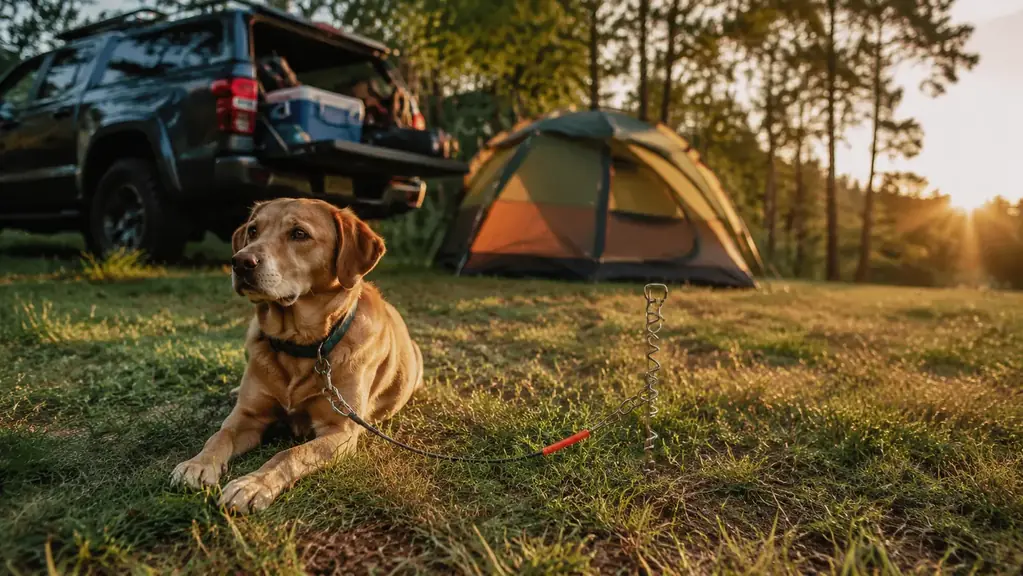
If you tether a dog the way I do, you have already learned the hard lessons the reviews skip. You have watched your dog circle a tree until the leash is three wraps around the trunk and ten inches short. You have yanked a cheap spiral stake out of soft ground with one hard lunge after a deer. You read 6,000 glowing reviews on a tie-out and still wonder whether any of those people ever slept through a windy night with a 70-pound dog on a cable.
I am Mark, and I camp, hunt, and fish with two dogs. One is a pointer mix that wants to be in the next county at the sound of gunfire, and the other is a camp dog that just wants to be within arm's reach of the fire. I have used the Petbobi tie-out for six months now, through hard-packed campsites, sandy river bottoms, and the muddy yard after rain. Here is what the 6,000 reviews do not tell you.
The Quick Verdict
The Petbobi is the best budget tie-out I have used at camp, but it is not a set-it-and-forget-it stake. Buy it for the swivel and the spring, plan to screw it in deeper than the reviews suggest, and carry a mallet for the sites where the ground fights back.
Amazon Check Today's Price →A tie-out that stays put when your dog lunges after a deer
The Petbobi's spiral stake, shock spring, and 360-degree swivel are the combination that keeps a tethered dog safe through a full weekend at camp. Check today's price on Amazon before you head out.
Amazon Check Today's Price on Amazon →How I've Used It
I have not babied this thing. Over six months the Petbobi has been set up at a dozen campsites, left out through two thunderstorms, dragged through gravel, and used nearly every day in the yard when I am splitting wood and do not want a dog underfoot. My pointer, Boone, weighs 68 pounds and pulls like a draft horse when he is excited. My camp dog, Sadie, is a calmer 55 pounds but she likes to dig at the base of the stake out of pure boredom.
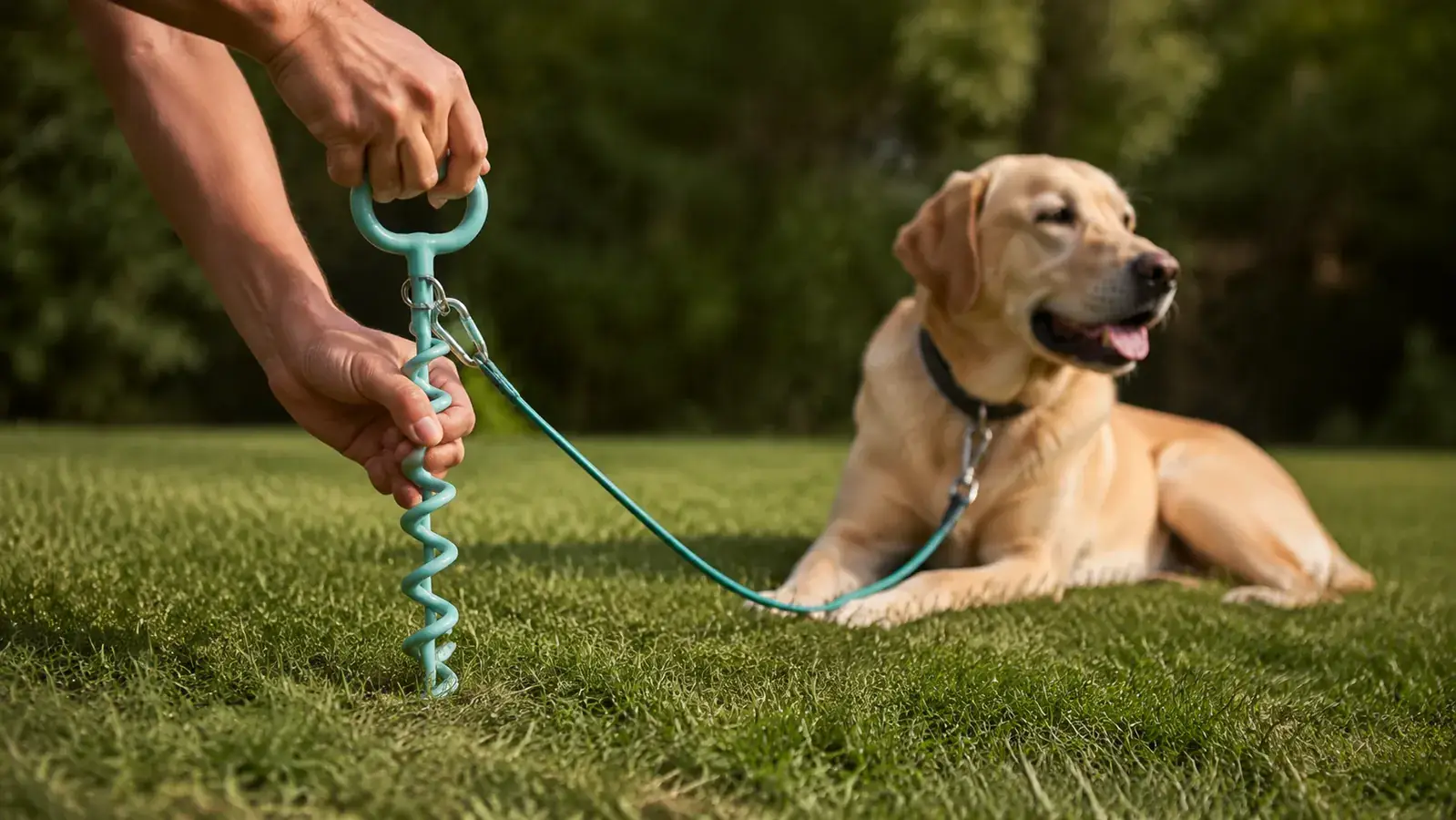
The kit comes with a 16-inch spiral ground anchor, a 20-foot vinyl-coated steel cable, a 4-inch shock spring, and two swivel points so the dog can spin without wrapping the cable. Set up takes about two minutes once you know what you are doing. You twist the stake in like a corkscrew, attach the spring and cable, and clip the swivel to the dog's collar or harness. Total weight is a few pounds, so it rides in my gear bag without complaint.
The honest part is that setup speed changes depending on where you are. In soft, loamy camp ground the stake goes in with your hands in under a minute. On hard-packed gravel, on the shoulder of a fire road, or in that rock crust most campgrounds call a site, you are going to be fighting it. I keep a rubber mallet in the truck now, and I screw the stake most of the way in by hand, then tap it the rest of the way. That one habit has saved more than one frustrating evening.
Why 6,000 Reviews Miss the Real Story
Almost every review on the listing is from someone using the Petbobi in a grassy backyard. Of course it bites well there. Grass over soft lawn soil is the easiest ground a spiral stake will ever see. The reviews that talk about it pulling out are usually from people who set it in the exact same soil and blamed the stake when a big dog hit the end of the cable.
The truth is the Petbobi is only as good as the ground you give it. In that soft lawn it is borderline bulletproof. On a real campsite, where the soil is packed by decades of tent stakes and truck tires, you need to work for the bite. None of that shows up in the star rating, and it is the difference between a tie-out that protects your dog and one that lets them trot off toward the road the first time a squirrel runs past.
The other thing the reviews do not mention is bite angle. I cannot tell you how many posts say the stake is not long enough when the real issue is it was set at an angle. Screw the spiral straight down, perpendicular to the ground, and it holds. Screw it in at an angle and a heavy dog torques it loose over an afternoon. That is a setup mistake, not a design flaw, and it is the number one reason people think this stake is weak.
The Spiral Stake: Where It Bites and Where It Does Not
At 16 inches, the spiral anchor is on the long side for this price, and that length matters. The bite comes from the coils grabbing soil, not from weight sitting on top, so the deeper it goes the more lateral force it shrugs off. Set properly in soft-to-medium ground, the stake has held Boone through some serious full-speed lunges. The 4-inch shock spring does real work here, too. It stretches on the hit instead of passing the whole jerk straight to the stake, which is exactly what keeps a seated stake seated.
Where it struggles is predictable. Loose sand, like a river-bottom campsite, does not give the coils anything to grip, and a determined dog can work the stake out over a quiet hour. Frozen ground in early spring is a battle. And the one that gets most people: dry, hard-packed clay. The stake will not screw in by hand and a mallet will mushroom the top coil if you pound it too hard. On those sites I switch to one of my heavy iron ground pins, or I find a tree and use a tether ring instead.
The Swivel and the Spring: The Parts That Wear First
The 360-degree swivel is the feature I would not give up. Without it, a dog circling the stake wraps the cable into a braid, and then you have a short cable and a tangled dog. With the swivel, Boone can circle all evening and the cable stays straight. After six months mine still spins freely, though it has collected a bit of grit and I oil it every few trips. That is normal maintenance, not a failure, but the reviews treat the swivel like it lasts forever untouched. It does not.
The shock spring is the part most people ignore and the part I would replace first if it wore out. It takes the meat of every lunge, and a dog that hits the end of a cable hard is the reason cheap tie-outs pull free. So far the spring on ours is still tight and it does not bind. If you plan to tether a strong, energetic dog for years, budget for the spring and swivel as wear items, the same way you would plan to replace a boot lace. It is a handful of parts you would rather swap than have fail at a site with no fence.
The Cable: What Heavy Duty Actually Means After a Season
The 20-foot cable is vinyl-coated steel, and the coating is there for a reason. Bare steel would gall a dog's skin when they circle, and the vinyl keeps that from happening. After six months ours still has its coating intact with no raw steel showing, which is better than earlier cheap tie-outs I ran where the coating cracked at the swivel within a month. The 20-foot radius is also the right number. Any shorter and the dog hovers right at your feet; much longer and you are running trip lines across the campsite.
The honest complaint is stretch and memory. The cable is not rigid, and over time it develops kinks from being coiled and uncoiled at mixed angles. They do not weaken it in any way I can measure, but they make the cable sit in slightly awkward loops on the ground. I also wish it came with a clip at both ends, since I occasionally swap between the stake and a tree anchor depending on the site. Minor stuff, but it is the kind of detail you only notice a few trips in.
The Harness Question Nobody Asks
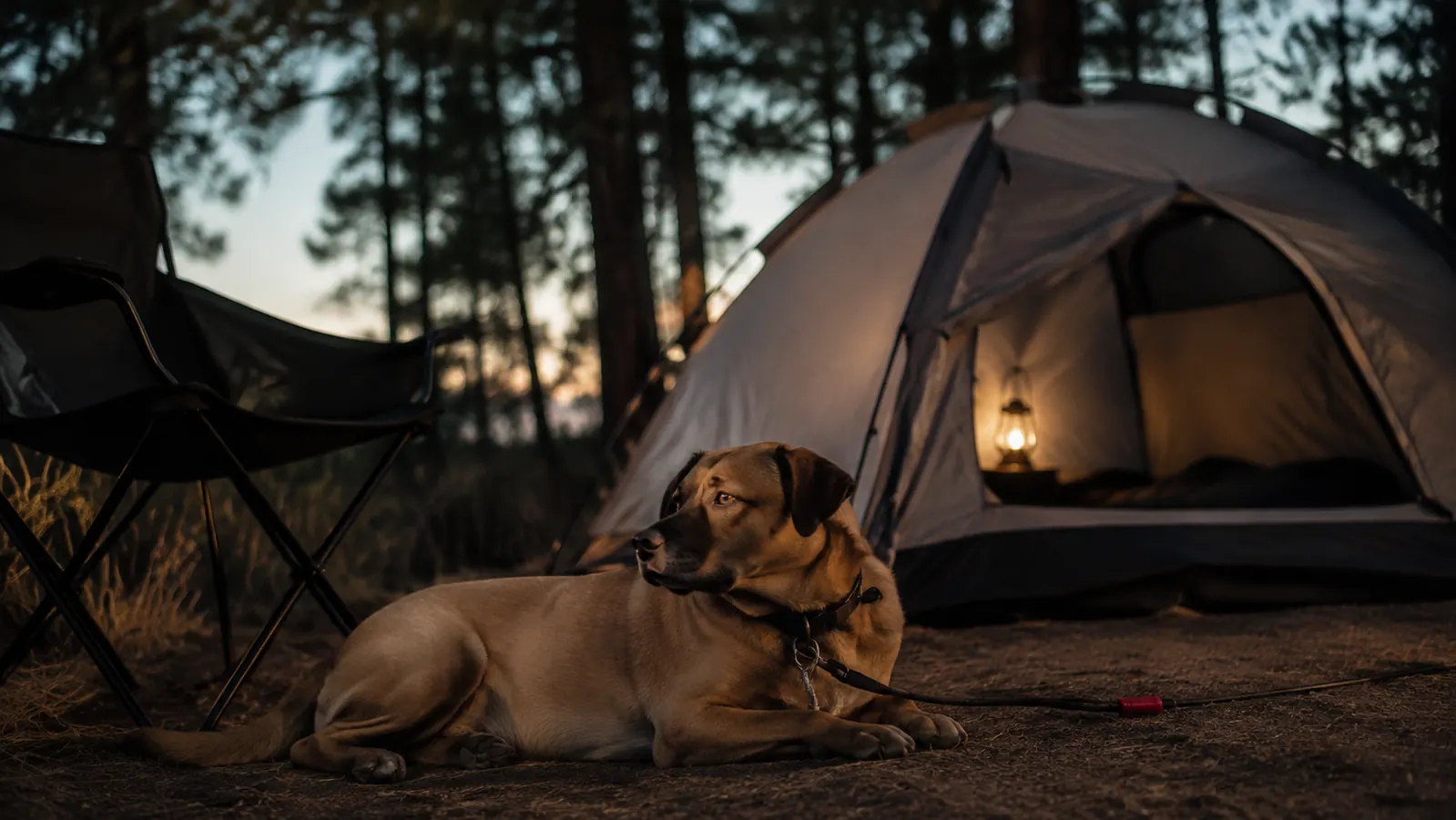
The Petbobi clips to a collar or a harness, and that choice matters more than any review will tell you. On a flat collar, a dog that lunges to the end of the cable takes the full force across the throat. Boone has a thick neck and it did not hurt him, but I stopped clipping the tether to his collar the second trip anyway. A chest harness spreads that load across the shoulders and ribs where the dog is built to take it. That is not Petbobi's fault, the same rule applies to any tie-out. But since this stake is strong enough that your dog will actually reach the end of the cable at speed, you want the harness. It is the single best upgrade you can pair with this kit and it costs less than a tank of gas.
There is also the question of how the dog wears the gear while you are actually working. When I am splitting wood or gutting a fish, the last thing I want is a dog tangled in a line they cannot see. The 20-foot radius gives them room to move without ending up under the truck, but it does not stop them from crossing your path. The trick is to set the stake where the dog's natural loop does not cross where you are standing, and to drop them to a shorter line when things get dicey. A tie-out is a supervision tool, not a replacement for paying attention. Campers who treat it as babysitting are the ones writing the one-star reviews.
The last thing people read the reviews for is whether it is safe to leave the stake in overnight. I have. Twice a storm came through and the stake held both times, but I check it each morning before I trust it, because a stake can back out during a night of a dog circling in the rain. If I am on questionable ground, I pull the dog in to the truck or the tent for the night. That is common sense more than product advice, but it is the kind of thing the listing photos will never show you.
A tie-out is only as good as the ground you hand it. Screw the spiral straight in, let the spring take the lunges, and a 70-pound dog will not move this stake. Set it in sand or loose gravel, and no stake on the shelf will save you.
Pros and Cons
What I Liked
- 16-inch spiral stake bites deep and holds a 68-pound dog through hard lunges in soft-to-medium ground
- 4-inch shock spring absorbs the hit at the end of the cable, which keeps the stake seated and is gentler on the dog
- 360-degree swivel stops the cable from tangling when a dog circles all evening
- Vinyl-coated steel cable protects the dog's skin and held up without cracking after six months
- Whole kit weighs a few pounds and packs down small for a gear bag
- Four-inch longer reach than most stakes in this price range
Where It Falls Short
- Struggles badly in loose sand, frozen ground, and hard-packed clay without a mallet
- The spiral can mushroom if you hammer it hard, so you have to be careful on tough sites
- Swivel and spring are wear items that need oiling and will eventually need replacing
- Cable develops kinks from repeated coiling, cosmetic but annoying
- Screws in at an angle it comes loose fast, so setup care matters
Who This Is For
Get the Petbobi if you tether a dog to a stake in normal camp and yard ground, in the 40 to 75 pound range, and you do not mind spending two careful minutes on setup. It is ideal for campers who want a dog to have a safe radius around the fire without wrapping every tree, and for hunters who want the dog settled near the rig between drives. If you set it right, spring and swivel working, it is a genuinely dependable piece of kit at a price that makes you feel like you got away with something. Pair it with the setup guide on how to set up a dog tie-out safely and you will miss most of the failure points I just listed. My long-term take after the full season is in the Petbobi tie-out long-term review, if you want the six-month picture in one place.
Who Should Skip It
Skip the Petbobi if you mostly camp on sand, hard rock, or deeply frozen ground, because none of the spiral stakes in this price range will hold there. Skip it if you have a dog over about 90 pounds with a serious prey drive, because no single stake does the job without backup, and you should be looking at a heavier anchor or a properly rated overhead line. And skip it if you want a tie-out you can jam in the dirt with one stomp and forget, because this one rewards a careful setup and punishes a lazy one. If most of your trips are on ground that will not take a spiral stake, tie to a tree with a rope ring or a purpose-built line instead.
What I keep coming back to is that the Petbobi does the one job it is built for without drama. It holds a tethered dog in camp and in the yard, it survives the weather, and it comes apart and goes back together fast enough that I actually pack it instead of leaving it home. I have owned fancier restraint systems and cheaper stakes, and this is the one that stayed out of the junk drawer. If you tether a dog on real ground in the 40 to 75 pound range, it is worth the space on the shelf.
The budget tie-out that earns its spot in the gear bag
Six months of campouts, thunderstorms, and a 68-pound pointer hitting the end of the cable, and the Petbobi keeps biting. If you tether dogs at camp, this is the stake to start with. Check today's price on Amazon.
Amazon Check Today's Price on Amazon →